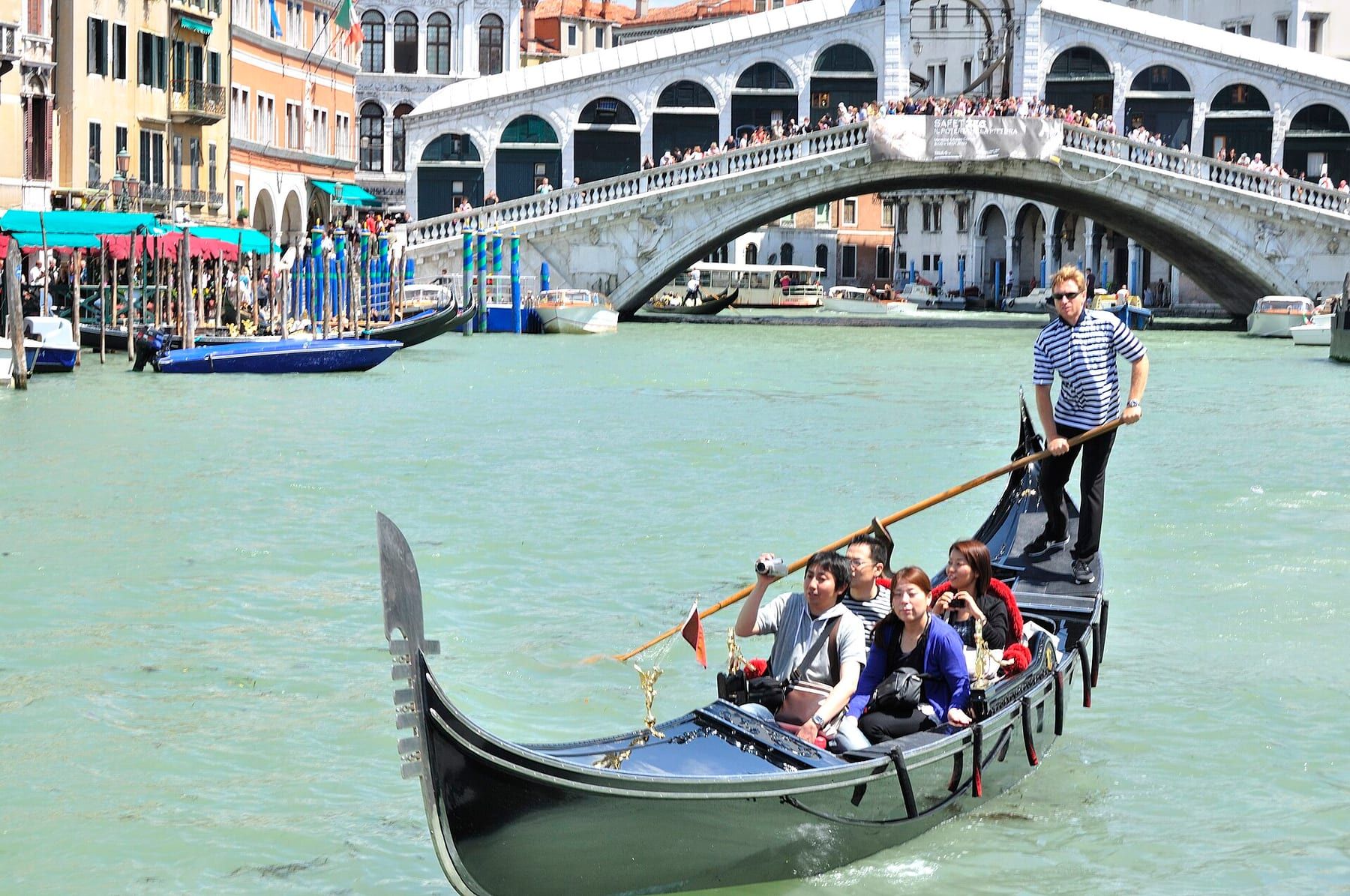
Gondola tours in Venice are sold as romance and delivered as engineering. The boat under you is a lopsided, hand-built rowing craft designed for shallow water and one oar; the person behind you passed a licensed exam to be there; and the price you pay was set by the city, not by the market. Knowing all three makes the 30 minutes better, and it stops you overpaying. This guide covers the boat, the history, the gondoliers, the kinds of ride on sale and what actually happens from the moment you step aboard.
What a gondola actually is
A gondola is a flat-bottomed rowing boat about 11 m (36 ft) long and 1.4–1.6 m wide, weighing roughly 350 kg empty. It is built by hand from about 280 pieces of eight different woods — oak, fir, larch, lime, walnut, cherry, mahogany and elm — each chosen for how it bends, floats or resists water. A single boat takes around two months to build and a new one costs tens of thousands of euros, which is why they are maintained for decades rather than replaced.
The strangest thing about it is that it is not symmetrical. The left side is about 24 cm longer than the right. That deliberate imbalance cancels out the sideways push of a single oar worked from the right-hand side, so the boat tracks straight without the rower crossing over. A gondola sitting empty at a stand leans visibly; with a gondolier’s weight on the stern it settles level.
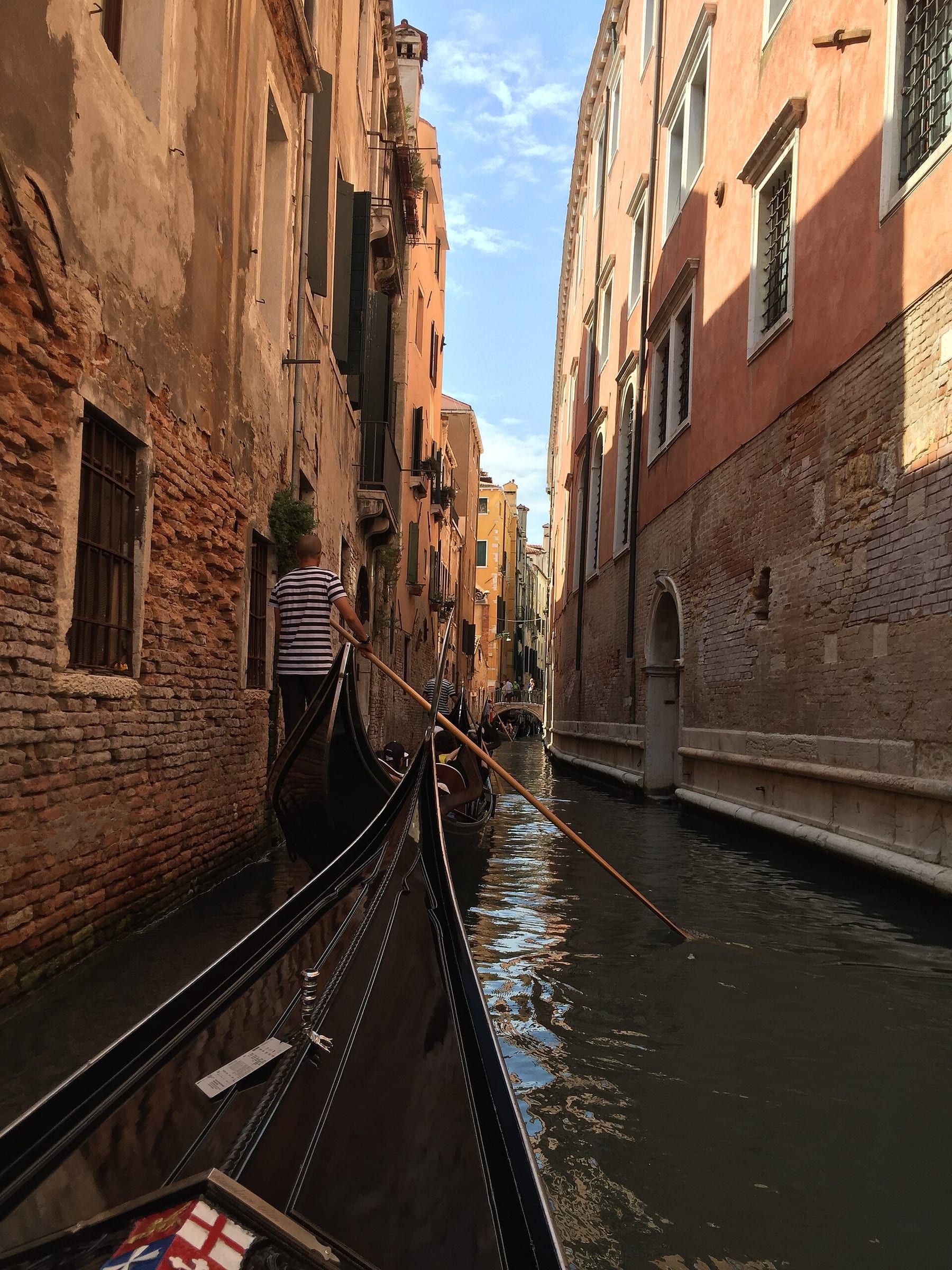
The gondolier stands at the stern facing the bow — rowing forward, not backward — which is what lets him read a blind corner and a bridge arch at the same time. The flat bottom means there is almost no keel, so the boat pivots on the spot in canals barely wider than it is long.
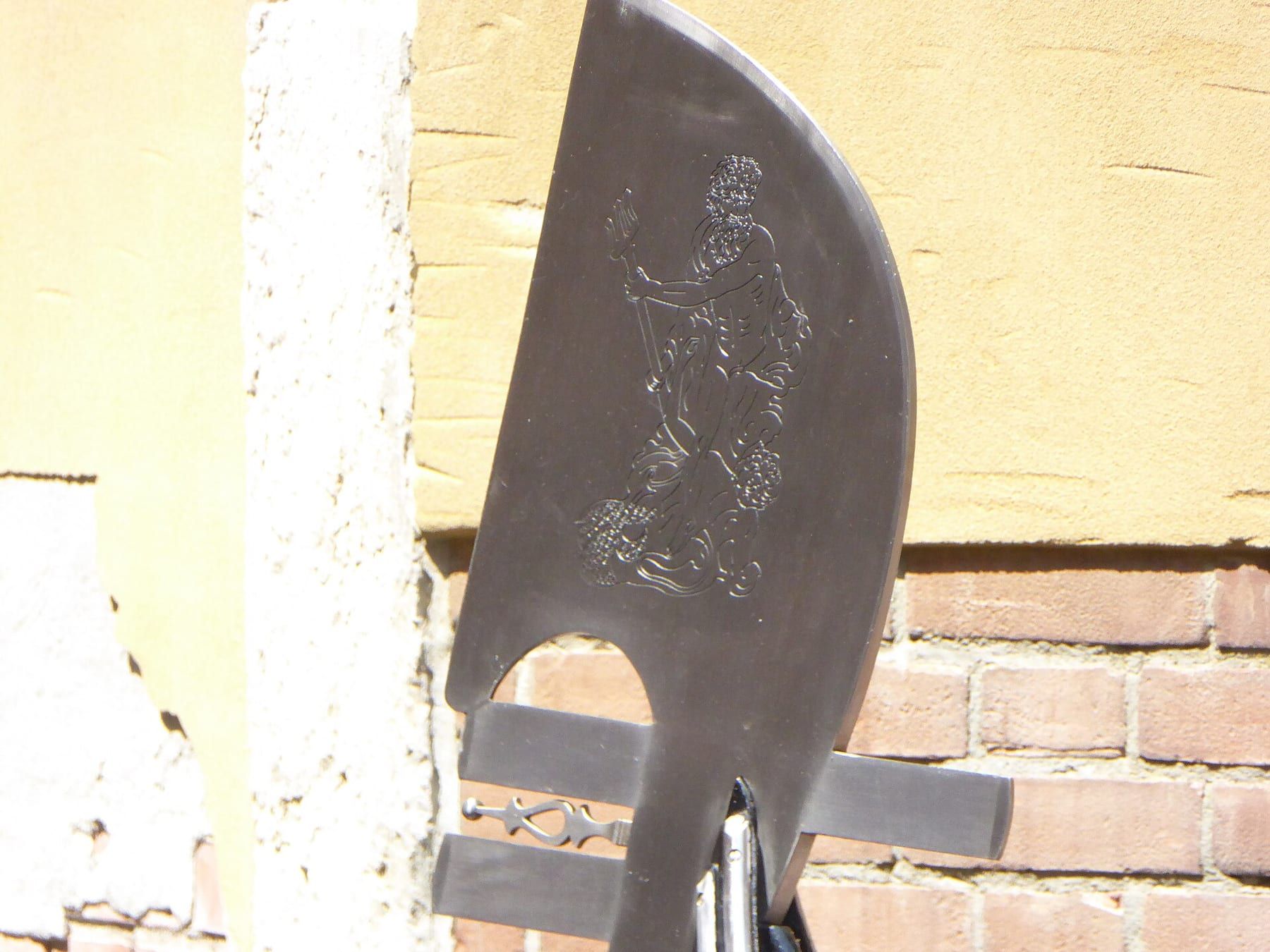
The forcola, the ferro and the black paint
Three parts of the boat are worth knowing by name.
- The forcola is the carved walnut oarlock on the right gunwale. It is not a simple notch: its curves give the gondolier several different rowing positions for pushing, braking, reversing and turning. Each one is carved to fit a specific rower.
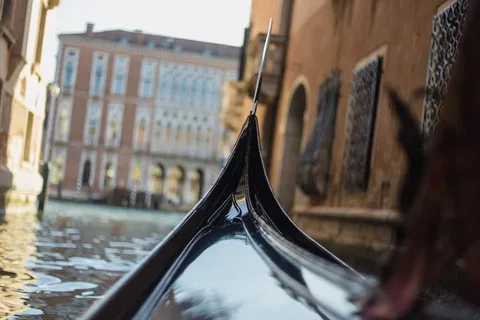
- The ferro is the toothed metal prow. Practically, it counterbalances the gondolier’s weight at the other end of the boat. Traditionally it is read as a map of Venice: six forward teeth for the six sestieri, the backward tooth for Giudecca, the curved top for the doge’s cap and the arch for the Rialto Bridge. That reading is folklore, not regulation, but every gondolier will tell you a version of it.
- The colour. Every gondola is black because a sumptuary law of 1562 banned the decorated, competitively lavish boats that Venetian families had been using to out-do each other. The ban worked, outlived the Republic, and produced the silhouette the city is now known for.
One part is missing: the felze, the little cabin that once enclosed passengers against weather and prying eyes. It disappeared during the twentieth century, because visitors wanted the view rather than the privacy.
A short history
The first documented mention of a gondola dates to 1094, when the boat was working transport rather than an attraction. In the seventeenth and eighteenth centuries Venice had somewhere between 8,000 and 10,000 of them — a functioning taxi fleet for a city with no roads, with private boats belonging to households the way carriages did elsewhere.
Motor boats, bridges and the vaporetto took that work away. Today there are roughly 400 licensed gondoliers and about the same number of working gondolas, plus the plainer traghetto boats that still ferry people across the Grand Canal. The gondola survives as a craft object and a paid ride; the trade around it — building, repairing, rowing, licensing — survives with it.
Who the gondoliers are
A gondolier’s licence is not something you buy. It takes about 400 hours of training over roughly six months, a practical exam on the water, and tests in Venetian history and foreign languages, before the Ente Gondola issues a licence. There are around 400 licence holders (about 433 licences in circulation), and the number is capped, which is why places tend to move within families and cooperatives.
Giorgia Boscolo became the first fully licensed woman gondolier in August 2010, after a trade that had been male for nine centuries.
The uniform is real, not a costume: a striped shirt in black-and-white or red-and-white, dark trousers, sometimes a straw hat with a ribbon. What gondoliers do not do is sing. Rowing a heavy boat through canal traffic while narrating is already two jobs; music is a separate profession, hired separately.
Where gondolas are built: the squeri
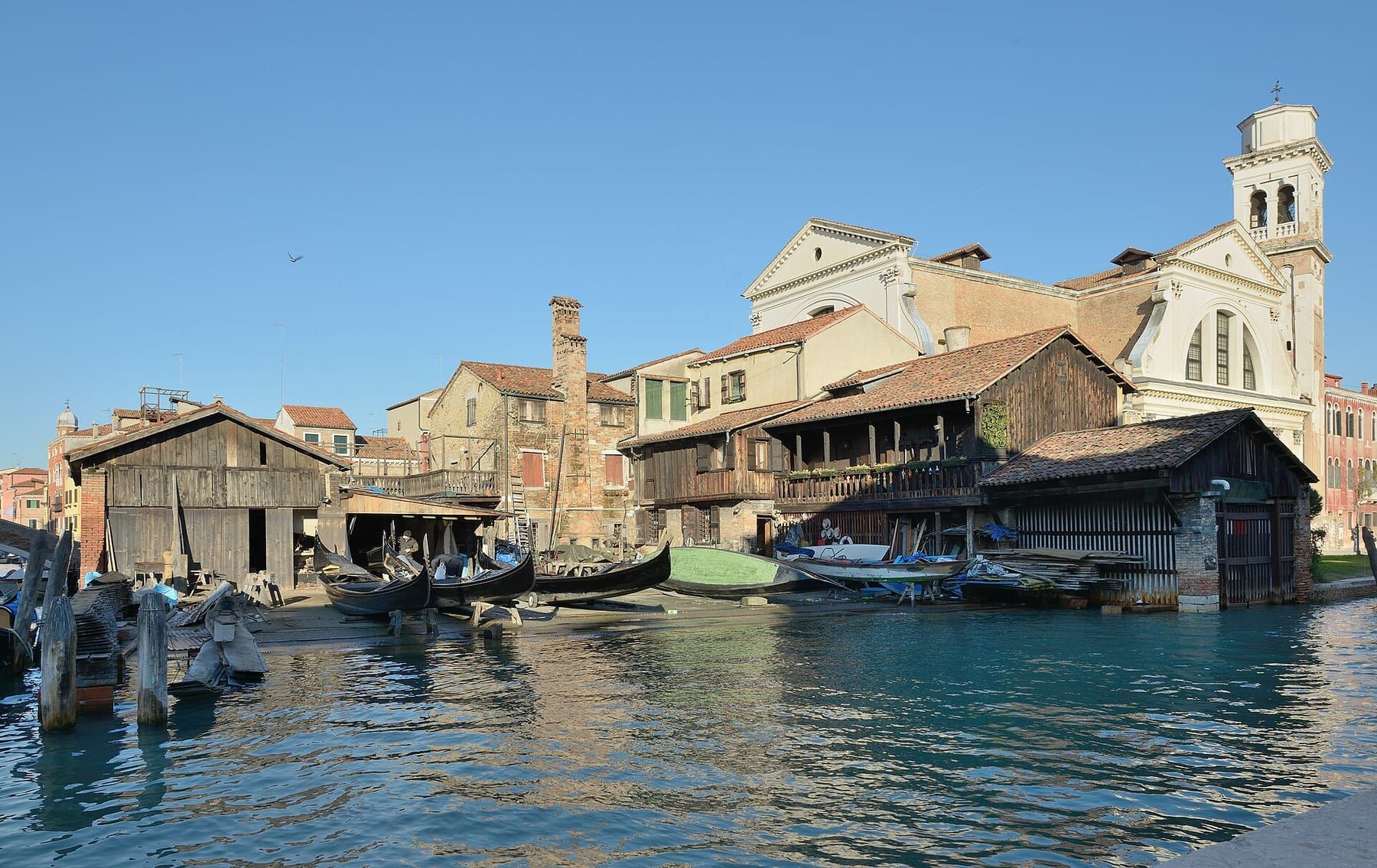
Gondolas are built and repaired in boatyards called squeri — sloped yards where the boat is pulled out of the water sideways. The most photographed is the Squero di San Trovaso in Dorsoduro, with its wooden alpine-looking buildings; the view is from the opposite bank of the rio, on Fondamenta Nani, and you can watch hulls being sanded and tarred from a café table there. These are working yards, not museums — look from across the water rather than walking in.
What a ride costs
The price is public and fixed, which removes most of the anxiety around gondola tours in Venice.
Two things people get wrong. First, that is per gondola, not per person: five passengers split €90 into €18 each, while a couple pays €45 each. Second, the evening rate starts at 19:00 by the clock, not by the light — in June and July you can board at 18:00 in golden light and still pay the day rate.
Extras are where the number moves. Each additional 20 minutes is €45 by day or €55 at night, and a musician is negotiated separately, typically from around €50 per boat. Agree the total out loud before you step in. Tips are not expected; €5–10 is a kindness after a good ride, not an obligation. There are no student or senior discounts on gondolas, and children count as passengers against the limit of five.
The kinds of ride you can book
Six formats, one boat. Platform prices below were checked in September 2026.
Same ride, three booking sites
Live prices from our partner feeds. Tap a button to open the listing.
| Platform | Price | Rating | Duration | Book |
|---|---|---|---|---|
| GetYourGuide Venice: Grand Canal Gondola Ride with App Commentary Best price | €37per person | ★ 4.226,138 reviews | 30 min | Book on GetYourGuide |
| Tiqets Venice: Classic Gondola Ride | €39per person | ★ 4.21,398 reviews | 50 min | Book on Tiqets |
| Headout Venice Grand Canal Classic Gondola Ride | €39per person | ★ 4.31,424 reviews | 30 min | Book on Headout |
- Shared ride, booked online. A seat in a gondola with strangers, from about €37 per person, with a fixed slot and a voucher. The cheapest way for one or two people to ride. See shared gondola rides.
- Walk-up at a stand. You pay the tariff per boat and negotiate the route directly with the gondolier. Unbeatable for four or five people. See where to board.
- Private, booked online. The boat to yourselves, from about €80 per boat, with a set route and a guaranteed time. See private gondola rides.
- Serenade. A singer and accordionist in one boat, six to ten gondolas following in convoy, mostly Italian and Neapolitan standards rather than Venetian songs. See gondola serenades.
- Combos. The 30-minute ride bundled with St Mark’s Basilica, the Doge’s Palace or a walking tour, often cheaper than buying separately. See combo tours.
- Traghetto. The €2 crossing of the Grand Canal in a working gondola rowed by two men, two to five minutes, cash only. Five crossings are running at the time of writing — Dogana, Santa Maria del Giglio, San Tomà, Santa Sofia and Carbon, the last on weekday mornings only. Not a tour, but it is a genuine gondola. See the traghetto.
-
from €37 per person
Book on GetYourGuide -
from €39 per person
Book on Tiqets
What actually happens, step by step
- You find the stand or the meeting point. Booked online, the exact meeting point is on your voucher; most departures are within a few minutes’ walk of St Mark’s Square or Rialto. Walking up, you go to a stazio — Bacino Orseolo, Molo San Marco, Danieli, Santa Maria del Giglio, Rialto, San Tomà and others.
- You agree the price and the length. Confirm 30 minutes and the total before boarding. Gondoliers must display the tariff; if you are asked for more than the official rate for a standard ride, walk to the next stand.
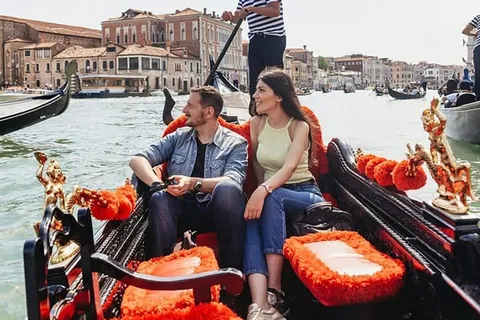
- You board one at a time. The gondolier holds the boat and offers a hand. Step into the middle of the hull, not onto the edge, and keep moving to your seat before the next person steps in.
- You sit and stay seated. The seats face forward and slightly to the sides; the best photographs come from the two front-facing seats. Standing up mid-canal is the one thing that genuinely annoys a gondolier.
- You go where the water allows. Typically a stretch of a main canal and several narrow rii. Ask at the start if you want more small canals than Grand Canal, or the pass under the Bridge of Sighs — that one only works from the Danieli and Molo side, on the Rio di Palazzo.
- You get 30 minutes, timed from departure. Not from when you joined the queue. Extensions are agreed on the water, at the published rate.
Etiquette, weather and small print
Rides continue in light rain and there is no cover, so carry a compact umbrella. Storms and strong wind cancel them; acqua alta rarely affects gondolas. Motion sickness is unusual on flat canal water, though the Bacino San Marco can chop on a windy day, and the Grand Canal carries wake from vaporetti and water taxis — side canals are calmer and much quieter.
Wear what you would wear walking around Venice; there is no dress code, but soft-soled shoes make boarding easier. Do not stand for photos, do not swap seats mid-ride, and do not ask the gondolier to sing — it is asked constantly and it is not the job. If you want music, book a serenade.
Is a gondola ride worth it?
For four or five people splitting the tariff, it is one of the cheapest good things in Venice. For a couple it is a considered purchase: about €45 each at the stand, or roughly €37 each for a shared seat booked ahead. What you buy is a viewpoint — water level, under bridges, along façades whose front doors open onto canals because that is the side that mattered. No other boat in the city goes where a gondola goes, and no photograph from a bridge reproduces it.
If you are ready to compare actual departures and slots, start with our gondola price breakdown and the booking guide; if you want the shortlist first, the best gondola rides in Venice page ranks them by rating and review count. Whichever route you take through gondola tours in Venice, book the sunset slots early — they sell out first.
Check gondola ride availability from €37 · ★ 4.2
Frequently asked questions
What is a gondola?
A flat-bottomed Venetian rowing boat about 11 metres long, built asymmetrically so a single oar on the right-hand side pushes it in a straight line. It is hand-built from roughly 280 pieces of eight different woods and weighs around 350 kg empty.
Why are gondolas black?
A sumptuary law of 1562 banned decorated, competitively ostentatious boats. Gondolas have been black ever since, and the rule outlived the republic that made it.
Why is a gondola lopsided?
The left side is about 24 cm longer than the right. That built-in curve counteracts the sideways push of one oar rowed from the right, so the gondolier can steer without switching sides.
How do you become a gondolier in Venice?
Around 400 hours of training over roughly six months, a practical rowing exam, plus history and foreign-language tests, then a licence controlled by the Ente Gondola. There are about 400 licence holders.
Are there women gondoliers?
Yes. Giorgia Boscolo became the first fully licensed woman gondolier in August 2010.
How long is a gondola ride and how many people fit?
The standard ride is 30 minutes by day or 35 minutes after 19:00, with a maximum of five passengers per boat since 2020. Extra 20-minute blocks cost €45 by day and €55 at night.
Do gondoliers sing during the ride?
No. Rowing a gondola through traffic is work. Singing on the canals comes from hired musicians on serenade rides, who travel in one boat while other gondolas follow.
Where are gondolas built?
In boatyards called squeri. The most photographed is the Squero di San Trovaso in Dorsoduro, best seen from the opposite bank on Fondamenta Nani.