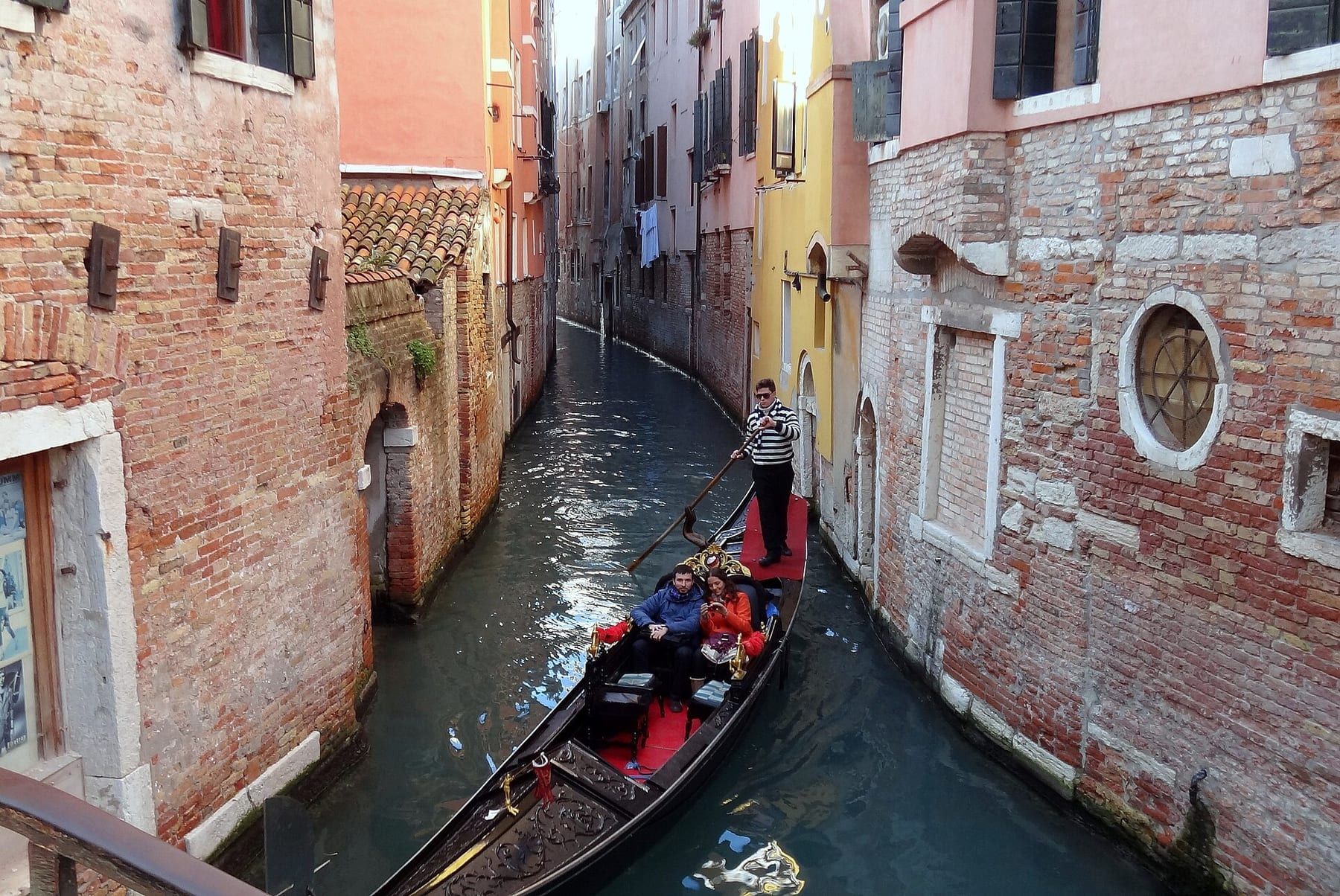
Taking a gondola ride in Venice is not complicated, but almost everything that goes wrong with one is avoidable and happens in the first ninety seconds: the wrong shoes, the wrong seat, a bag on the gunwale, a price that was never agreed. This page is the pre-flight check. Thirty minutes on the water, done properly.
How many people fit, and where to sit
Five passengers, plus the gondolier. The maximum dropped from six to five in 2020 — gondoliers cite the average weight of today’s tourists as the reason. Children count. Infants on a lap are usually free, but the policy belongs to the operator, so check the product page before you assume.
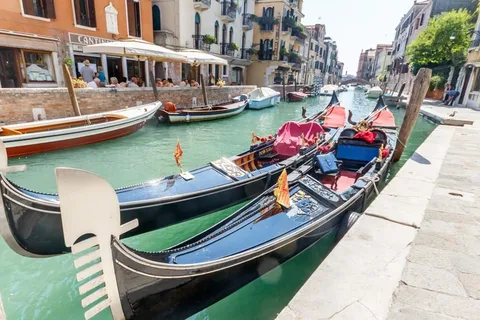
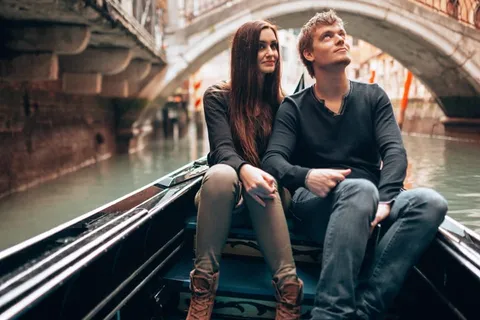
Seats sit low, close to the waterline, and the boat is narrow: about 1.4–1.6 m across an 11 m (36 ft) hull. Practical consequences:
- The forward seats are the good ones. You face the canal, with the gondolier and his oar behind you.
- Board in the order you want to sit. Once five people are in, nobody is swapping places.
- Distribute weight sensibly. The gondolier will tell you where to sit if it matters; do what he says without debating it.
- Do not stand up. Not for a photo, not to swap seats, not at all until the boat is alongside and the gondolier says so.
For four or five people the maths also favours you: the official tariff published by the Comune di Venezia (Ente Gondola) is €90 per gondola for 30 minutes by day, which is €18 each with a full boat. The prices page has the full breakdown.
What to wear and what to bring
Shoes. Flat and grippy. You step down from a stone bank into a boat that moves under you. Heels are the single most common bad decision at the stands.
Layers. Water is cooler than the street, and you sit still for half an hour. In winter that means a real coat; in shoulder season, something with sleeves for after sunset.
A hat. Gondolas lost their cabins — the felze — in the 20th century because tourists wanted the view, and nothing replaced them. There is no shade on board. Between May and September, at midday, that is thirty minutes of direct sun on a black boat.
Water, and a small umbrella. Both fit in a day bag; neither is provided.
Bags on your lap or between your feet. Never on the gunwale. Wake from a passing vaporetto arrives without warning and a bag in the Grand Canal is not coming back.
Kids, strollers, pregnancy and mobility
Children ride happily — the boat is slow, low and stable, and a 30-minute ride is about the right attention span. Bring the hat rule down to them as well.
Strollers are the problem. There is no luggage space on a gondola. A folded stroller has to be held on a lap or left with someone waiting on the bank, and on a shared boat that lap space is the only space there is. If nobody can stay ashore with it, ask the operator before you book rather than at the landing.
If you are pregnant, unsteady, or have limited mobility, the ride itself is easy — the boarding is the hard part. There is a step down from the bank into a boat that is moving slightly, with no ramp and no fixed handrail. Ask the gondolier for a hand: they do this all day and will hold the boat and take your arm. But be honest about the limit — a gondola is not wheelchair accessible, and there is no version of it that is. If boarding is not realistic, a Grand Canal motor boat tour or a vaporetto ride down Line 1 gives you the same façades from a boat you can walk onto; see Venice boat tours.
Weather: rain, heat, wind and chop
Rain. Rides continue in light rain. Nobody hands you a cover. A small umbrella turns a drizzle into an atmospheric half hour, and the canals are noticeably emptier.
Storms and strong wind. Rides are cancelled. This is the main reason to book something with free cancellation, and to keep a flexible slot rather than a once-only one.
Acqua alta. High water rarely affects gondolas — it affects the walk to the stand more than the ride.
Heat. No shade, black hull, still air in the narrow canals. In July and August, ride before 10:00 or after 18:00, not at 14:00.
Motion sickness. Very rare. The canals are flat and the boat moves at walking pace. The exception is the Bacino San Marco in front of the Doge’s Palace on a windy day, where open water gets choppy, and the Grand Canal, where vaporetti and taxis throw wake. Side canals are calm. If you are sensitive, choose a stand with a small-canal route — San Tomà, Santa Maria del Giglio or San Moisè, all covered on our where to board page.
Photos that actually look like Venice
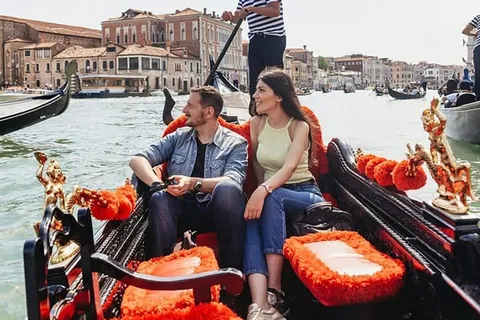
- Sit in front and shoot low. Hold the camera near the gunwale, just above the water. That low angle is what makes bridges arch and façades rise.
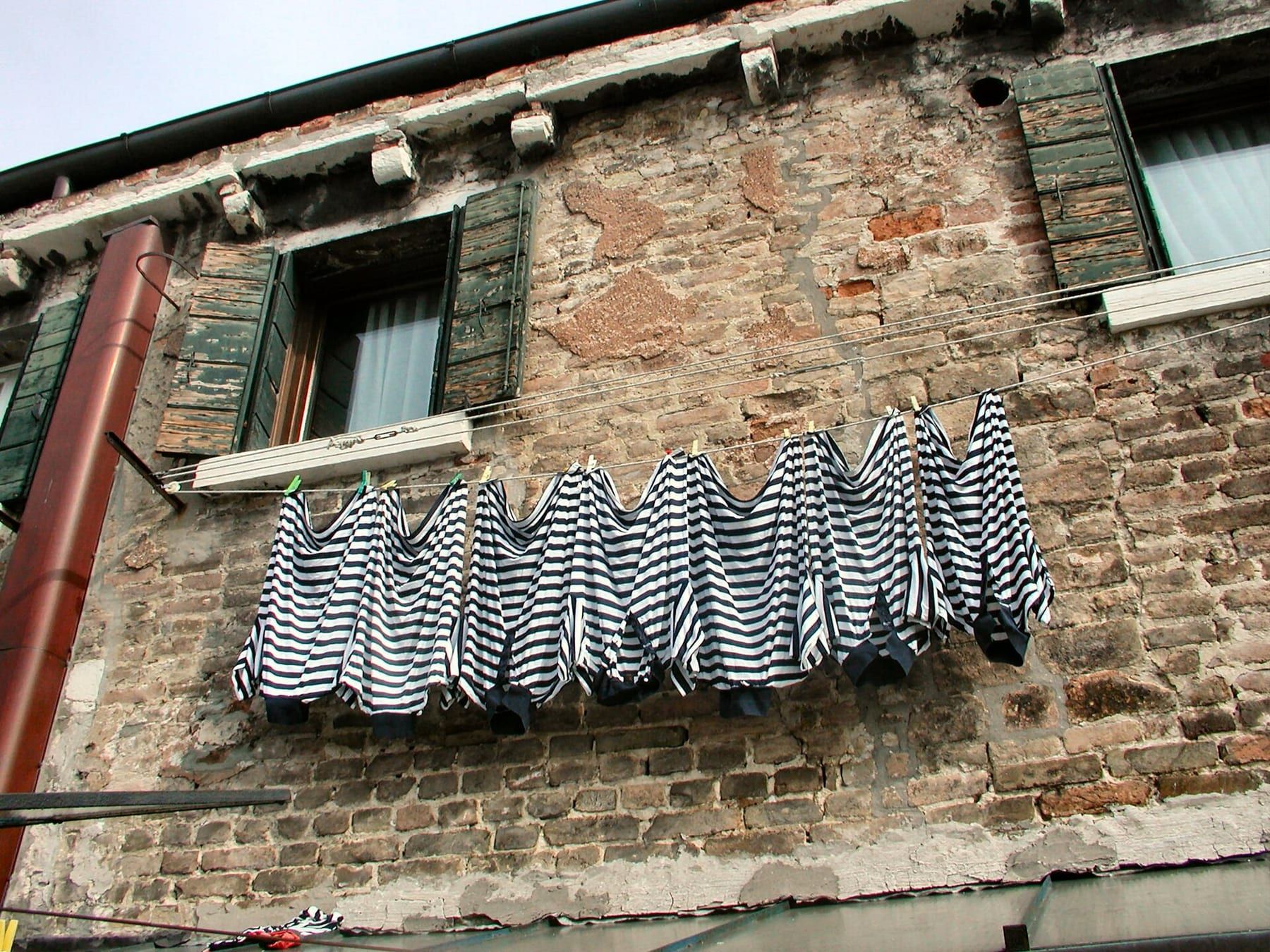
- Shoot backwards as well as forwards. The gondolier at the stern, striped shirt, oar mid-stroke, canal receding — that is the frame everyone forgets to take.
- Golden light beats blue hour. In late June the sun sets around 21:00, late August around 20:00, early October around 18:30 and in December around 16:30. In summer you can catch golden light at 18:00–18:45 and still pay the day tariff, because the evening rate only starts at 19:00.
- Keep the phone strapped or in hand. No selfie sticks over the side, no leaning out.
- If the pictures are the point, pay for pictures. A private ride with a photographer on board produces images nobody in the boat could take while sitting in it.
-
from €37 per person
Book on GetYourGuide -
from €36 per person
Book on GetYourGuide -
from €286.55 per group
Book on GetYourGuide
Prices and ratings above were checked in September 2026.
Money: tipping, extras and what is fixed
The tariff is fixed and identical at every stand: €90 for 30 minutes between 09:00 and 19:00, €110 for 35 minutes from 19:00 to 04:00, both per boat, up to five passengers. Each extra 20 minutes is €45 by day and €55 at night. Gondoliers must display the tariff. If you are asked for more than that for a standard ride, walk to the next stand.
Tips are not expected. €5–10 after a great ride is a kind gesture and nothing more is owed.
Musicians are an extra. A singer and accordionist are negotiated separately, typically €50 or more per boat, and are never part of the base tariff.
Agree the total before you sit down. Say how long you want and confirm the number in euros out loud. Ask which payment methods the gondolier takes — it varies, and not everyone accepts cards.
There are no student or senior discounts for gondolas. Anyone offering one is selling something else.
Talking to your gondolier
Gondoliers are licensed by the Ente Gondola after roughly 400 hours of training over about six months, a practical exam and tests in history and foreign languages. There are around 400 of them. Most speak good English and will point out palaces if you ask — but they are not tour guides, and rowing an 11 m boat through a two-metre canal takes concentration. Ask questions when the water is open, not when he is threading a corner.
They will not sing. If you want music, the serenade is a separate product: a singer and an accordionist ride in one gondola while six to ten boats follow in convoy, and you hear it from yours. The repertoire is Italian and Neapolitan — ‘O sole mio, Santa Lucia, Volare — not Venetian.
Timing, and the last thing before you board
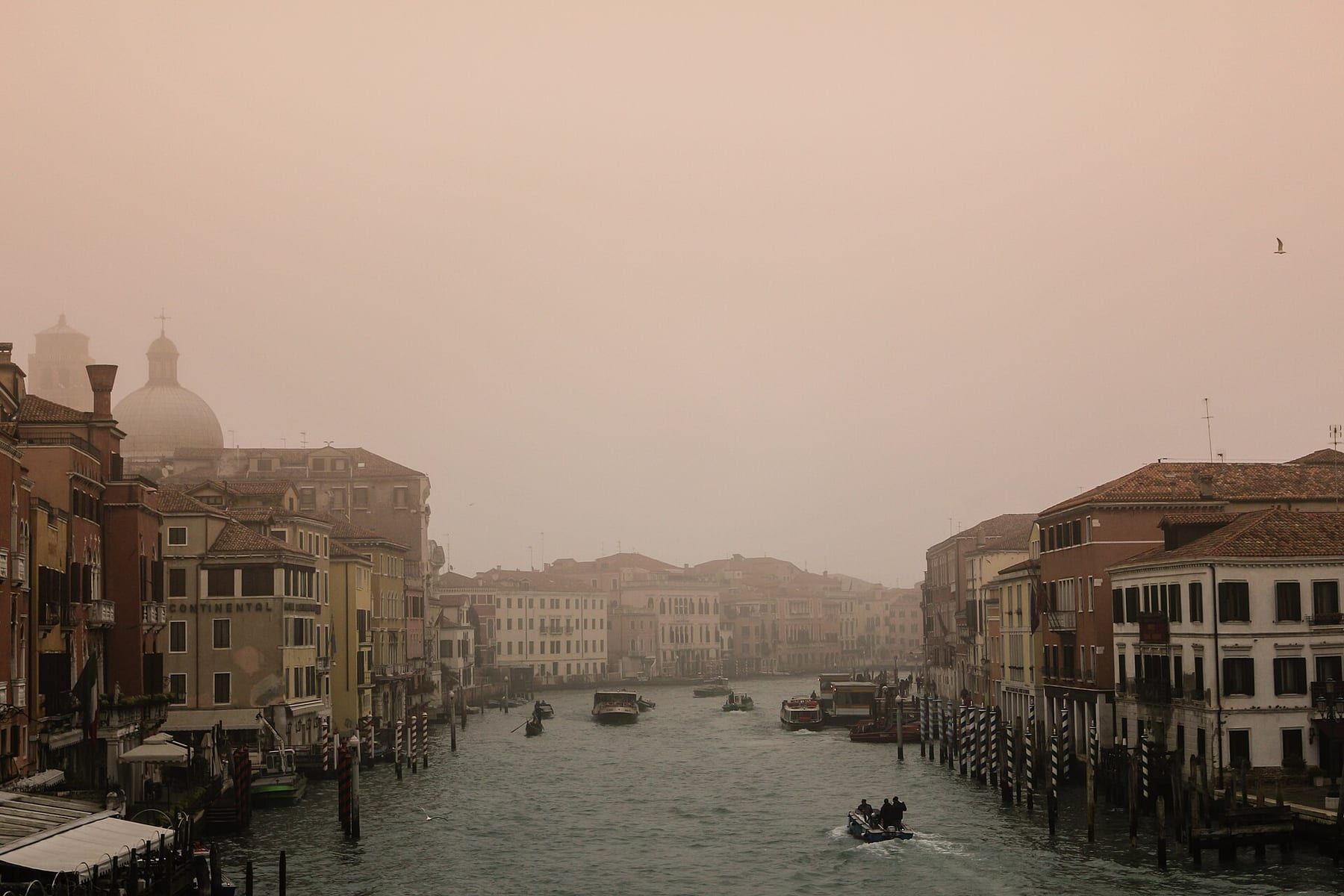
Quietest water is 08:30–10:00 and after 18:00. Peak crowds and boat traffic run 11:00–16:00 from April to October. November to February, Carnival aside, means short queues and fog on the canals — a genuinely good version of Venice if you dress for it.
Allow 45–60 minutes in your day for a 30-minute ride, including finding the stand or checking in with a host. And go to the toilet first. There are no facilities on a gondola, the ride is half an hour, and the nearest bar is on the other side of a bridge.
The mistakes to avoid
- Paying more than the official tariff at a stand because you did not ask first.
- Assuming a serenade is included — it never is.
- Booking a shared ride for four or five people when €90 for the whole boat is cheaper.
- Turning up at Bacino Orseolo at 13:00 in August and being surprised by the queue.
- Wearing heels, or carrying a bag you would mind losing.
- Standing up in the boat.
- Leaving a sunset slot in high season to the same afternoon.
Get those seven right and the rest takes care of itself. A gondola ride in Venice rewards being ready for it: sit low, look up, keep your phone in your hand and your bag in your lap, and let thirty minutes of the city arrive at rowing speed. When you are ready to lock in a time, our booking guide compares cancellation terms platform by platform.
Check gondola ride availability from €37 · ★ 4.2
Frequently asked questions
How many people fit in a gondola in Venice?
Five passengers, plus the gondolier. The limit dropped from six to five in 2020; gondoliers cite the rising average weight of tourists as the reason. Children count as passengers.
What should you wear on a gondola ride?
Flat, grippy shoes for stepping down into the boat, and layers — the water is cooler than the street. In summer bring a hat: there is no shade on a gondola. In winter bring a warm jacket, because you sit still for 30 minutes.
Do you tip the gondolier in Venice?
Tips are not expected. The tariff is fixed and the gondolier is not working for tips. €5–10 is a kind gesture after a genuinely good ride, and nothing more is owed.
Can you take a gondola ride with a baby or a stroller?
Babies and children are welcome and count towards the five-passenger limit; infants on a lap are usually free, but check the product page. There is no luggage space, so a stroller has to be folded and held, or left with someone on the bank.
Are gondolas wheelchair accessible?
No. Boarding means a step down from the bank into a boat that moves, with no ramp and no fixed handrail. Ask the gondolier for a hand — they help passengers on and off all day — but a gondola is not an accessible vehicle.
What happens if it rains during a gondola ride?
Rides continue in light rain. Gondolas have had no cabin since the felze disappeared in the 20th century, so there is no cover and no umbrella provided — bring your own. Rides are cancelled in storms and strong wind.
Where should you sit in a gondola for the best photos?
In the forward seats, with the gondolier behind you and the canal ahead. Shoot from low down, close to the water — that is the angle that makes façades and bridges look the way they do in pictures.
Do gondoliers sing?
No. The gondolier rows. A serenade is a separate product: a singer and an accordionist ride in one boat while several gondolas follow in convoy, and you hear the music from your own.