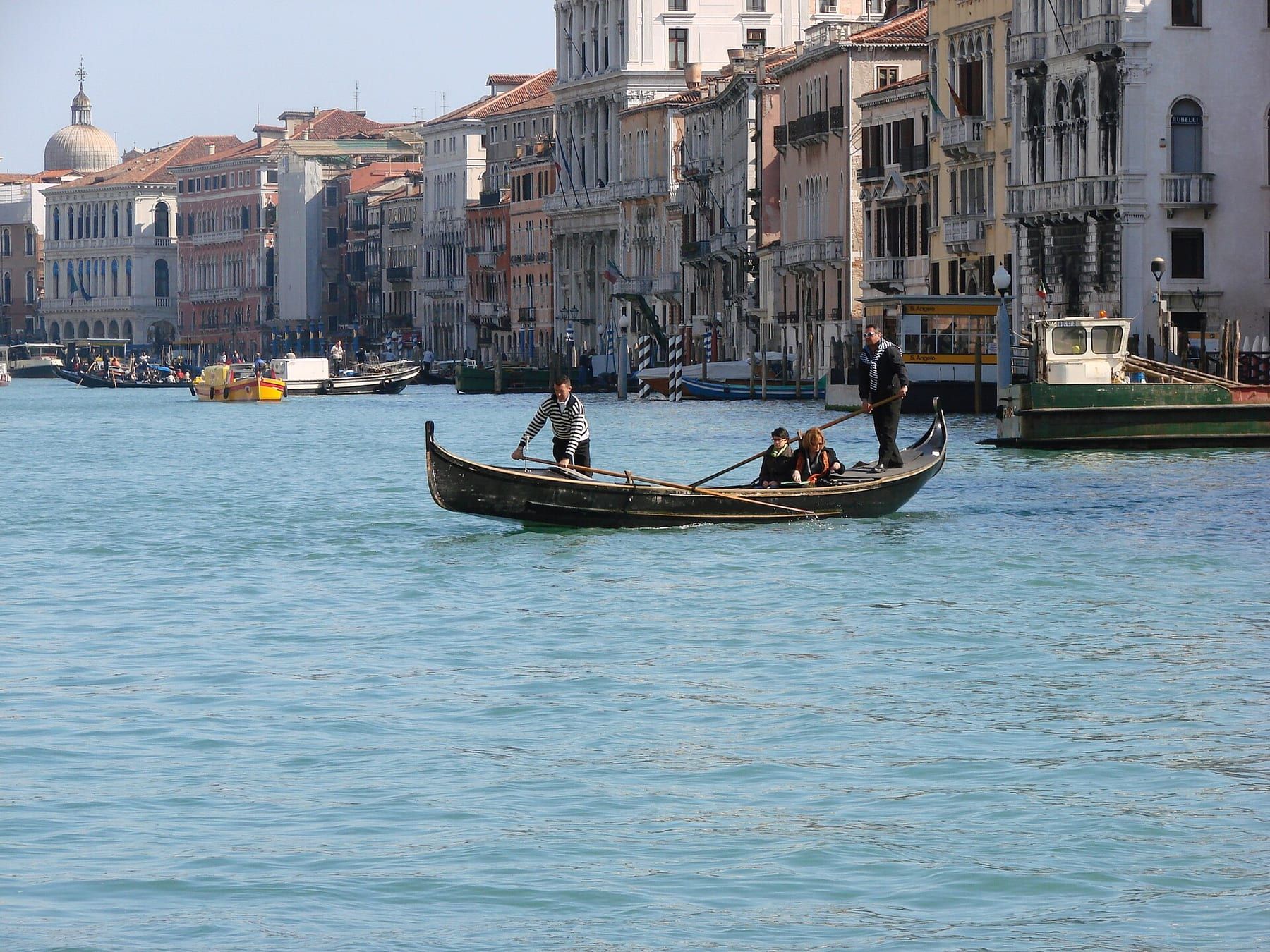
The traghetto in Venice is the city’s best-value piece of gondola: €2 buys you a crossing of the Grand Canal in a working gondola, rowed by two gondoliers, taking two to five minutes. Venetians use it as a bridge. Very few bridges cross the Grand Canal along its 3.8 km, so for locals on the wrong bank the traghetto is a shortcut, not an experience.
That is exactly why it is worth knowing about — and exactly why it is not a replacement for a gondola ride. Read this page as a life hack with an honest label on it.
What a traghetto actually is
A plain, older gondola stripped of the decoration you see on the tourist boats: no gilded prow ornaments, no velvet upholstery, no brass seahorses. Two gondoliers row instead of one, which is what lets the boat cut across the current and the vaporetto traffic quickly.
The boat itself is identical in the ways that matter: about 11 m (36 ft) long, asymmetric, with the left side roughly 24 cm longer than the right so a single oar on the right side drives it straight. The forcola — the carved walnut oarlock — is the same. You are standing in a gondola, and it is being rowed the way gondolas have been rowed for centuries.
The fare: €2, cash, no ticket
- €2 for non-residents.
- €0.70 for residents.
- Cash only, paid to the gondolier as you board. Coins are appreciated.
There is no ticket, no machine, no app and no pass. A vaporetto pass does not cover it. Nobody will check anything — you hand over the money and step on.
How to ride one without looking lost
- Find the landing. Look for a low wooden platform on the bank with a small crowd and a gondola nosing in. The signs say traghetto.
- Wait your turn. Boats leave when they are reasonably full, which in practice is every few minutes.
- Step down carefully. The gondola sits low and moves; take the hand the gondolier offers.
- Stand if you can. Venetians stand for the whole crossing, feet apart, facing the far bank, hands free. It is a genuine local skill and it keeps the boat balanced.
- Sit if you want to. Visitors are allowed to sit, and nobody will mind. If you are carrying a small child, pregnant, unsteady or wearing anything you would rather not fall over in, sit.
- Do not stand up mid-crossing once you have sat down, and keep bags on your shoulder or in your lap rather than on the gunwale.
The whole thing is over before you have finished composing a photograph. Take the picture from the bank first, then ride.
Where the crossings are
| Crossing | Banks | Nearby |
|---|---|---|
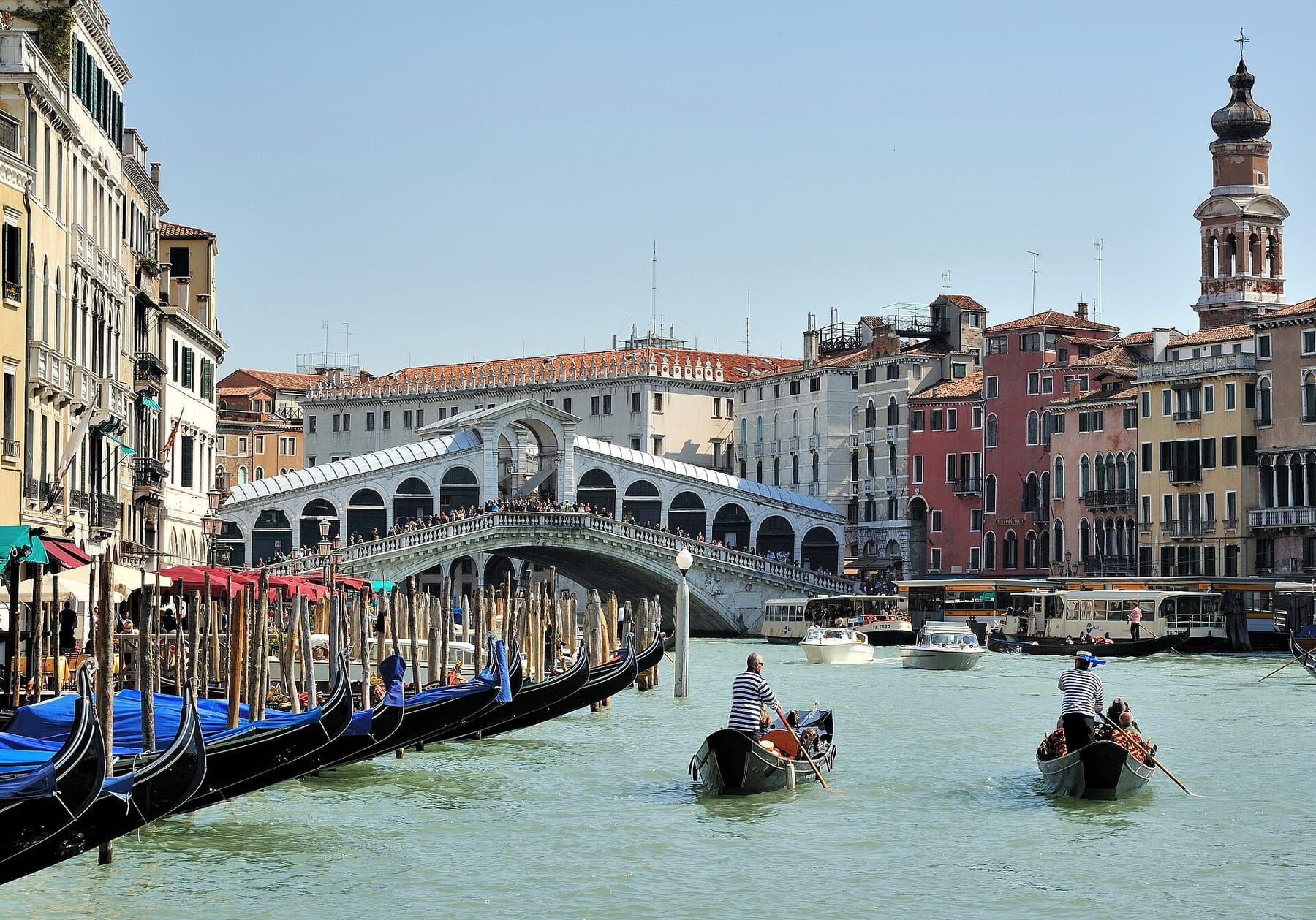
| Santa Sofia ↔ Pescaria | Cannaregio ↔ San Polo | Ca’ d’Oro to the Rialto market — the busiest crossing |
| San Tomà ↔ Sant’Angelo | San Polo ↔ San Marco | Frari side to the theatre district |
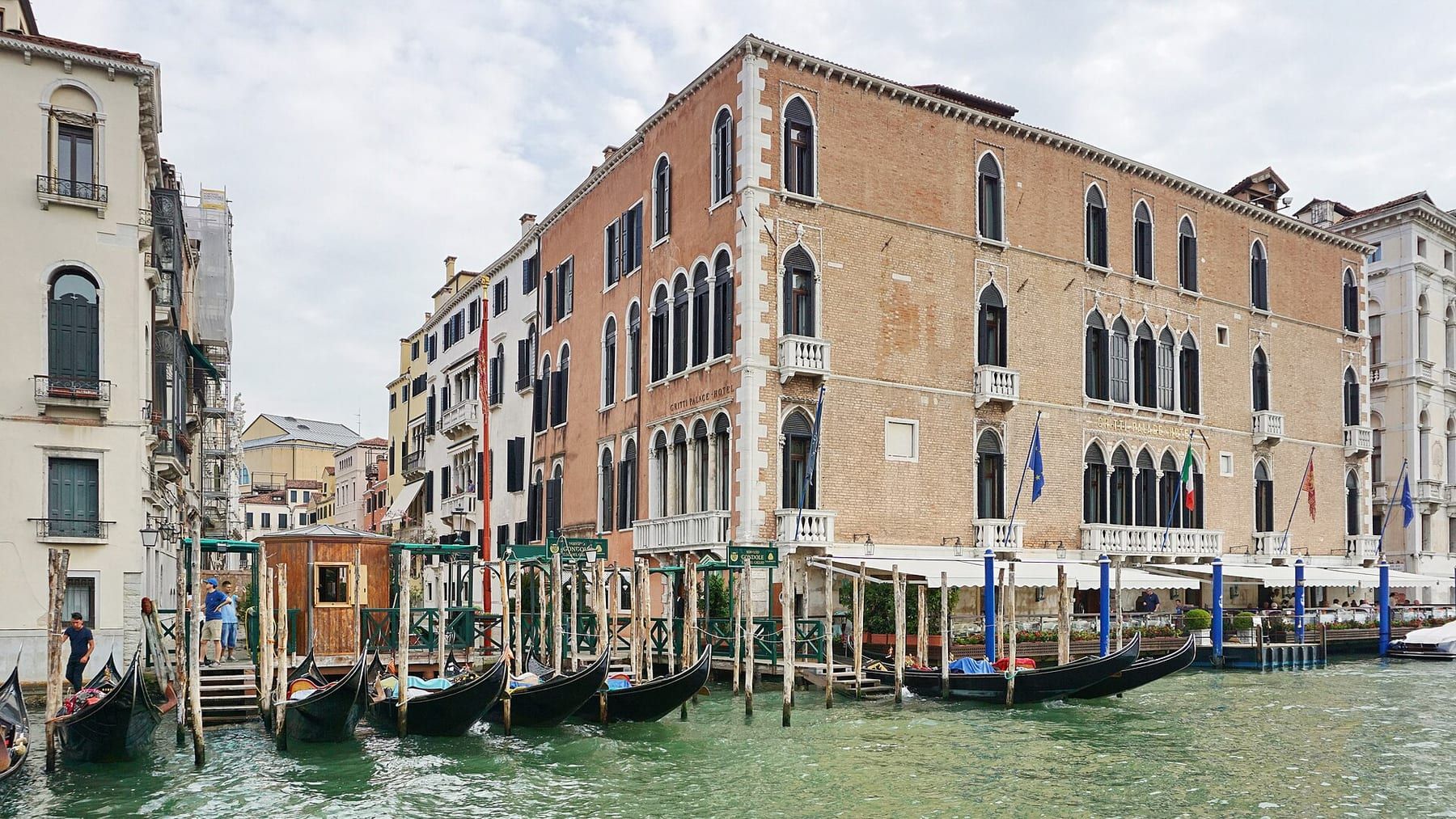
| Santa Maria del Giglio ↔ Salute | San Marco ↔ Dorsoduro | Gritti to Santa Maria della Salute |
| Riva del Carbon ↔ Riva del Vin | San Marco ↔ San Polo | Either side of the Rialto Bridge, near San Silvestro |
| San Marcuola, Dogana/Vallaresso | Cannaregio, canal mouth | Occasional service only |
The Santa Sofia crossing is the one to aim for if you only do one: it lands you at the Pescaria, the Rialto fish market, which is worth the trip on its own in the morning.
The Santa Maria del Giglio crossing is the prettiest — you cross with the dome of the Salute in front of you and the lower Grand Canal opening to your left.
Hours, and why they let you down
Hours run roughly 09:00 to 18:00 or 19:00, shorter on Sundays and shorter again in winter. Several crossings operate on weekdays only, and some close seasonally. Service also stops in bad weather and when there are not enough gondoliers rostered.
Practical consequence: never build an itinerary around a traghetto. Walk to the landing, and if the boat is not running, walk to the bridge instead. The Comune di Venezia publishes the current hours crossing by crossing: Dogana and Santa Maria del Giglio 09:00–18:00; San Tomà 08:30–19:00 on weekdays and 09:00–18:30 at weekends and on holidays; Santa Sofia 08:30–19:00 on weekdays and 09:00–18:00 at weekends and on holidays; Carbon 09:00–12:00 on weekdays only. There is no service on 15 August, 25 and 26 December or 1 January, and the boats stop at 13:00 on 24 and 31 December.
Why it is the cheapest way to be in a gondola
Compare the ladder honestly. The official tariff published by the Comune di Venezia (Ente Gondola) is €90 per gondola for 30 minutes by day, up to five passengers — €18 per person if the boat is full, €45 each for a couple. Online, a shared 30-minute ride starts at about €36 per person, and private boats run from around €80 to €140 (prices checked September 2026).
The traghetto costs €2. Per minute afloat it is not dramatically cheaper than a shared ride — but it is the only way to touch the experience for the price of a coffee, and for travellers on a tight budget that matters. It is also the only gondola in Venice that Venetians actually use, which is a different kind of value.
What you do not get for €2
Be clear-eyed about this before you decide the traghetto has saved you €36:
- No route. It goes straight across. No small canals, no palace-by-palace stretch, no detour.
- No time. Two to five minutes, most of it spent finding your balance.
- No seat with a view. You are standing shoulder to shoulder, facing the far bank.
- No commentary, no photos, no stops. The gondoliers are working a shuttle, not guiding.
- No evening option. By the time the light turns golden in summer, most crossings have finished for the day.
If what you want is thirty minutes on the water, quiet canals and something to remember, the traghetto is not it. Do both: cross for €2 in the morning, ride properly in the evening.
Traghetto vs shared ride vs private ride
| Traghetto | Shared ride | Private ride | |
|---|---|---|---|
| Price | €2 per person (cash) | From about €36 per person | €90 per boat at the stand; from about €80 online |
| Duration | 2–5 minutes | 30 minutes | 30 minutes, extendable |
| Route | Straight across the Grand Canal | Grand Canal plus small canals | Grand Canal plus small canals, negotiable at the stand |
| Who is on board | Whoever is crossing | Up to 5 passengers, strangers | Just your group, up to 5 |
| Seating | Standing (sitting tolerated) | Seated | Seated |
| Booking | Impossible — turn up | Online, fixed time slot | Online or at the stand |
| Best for | Budget travellers, a taste of the boat | Couples and solo travellers | Groups of 4–5, proposals, photos |
-
from €36 per person
Book on GetYourGuide -
from €37 per person
Book on GetYourGuide -
from €12 per person
Book on Tiqets
Getting to the landings, and what to combine
The traghetto landings sit next to some of the most useful vaporetto stops on Line 1: Rialto for Riva del Carbon and Riva del Vin, San Tomà for the San Tomà crossing, and San Marco-Vallaresso for Santa Maria del Giglio. Ca’ d’Oro serves Santa Sofia. From Santa Lucia station, San Marco is a 30–35 minute walk, or one Line 1 ride down the whole Grand Canal.
Three combinations that work:
-
Santa Sofia crossing at 08:00, then the Rialto fish market, then a gondola from one of the Rialto stands before the canal fills up.
-
Santa Maria del Giglio crossing to the Salute, then walk to the Peggy Guggenheim collection and the Squero di San Trovaso, the boatyard still building gondolas in Dorsoduro.
-
San Tomà crossing after the Frari, then a quiet ride from the San Tomà stand — the calmest departure in the city.
If you are getting around by water all day, an ACTV vaporetto pass usually beats single tickets; our Venice boat tours page sets out the options. And if the €2 crossing has done its job and left you wanting the real thing, compare what you actually get on the shared gondola ride page and in the full price breakdown.
The bottom line on the Venice traghetto
Take the traghetto. It costs €2, it is a genuine gondola rowed by genuine gondoliers, and standing up in one while a vaporetto wake rolls under you is a better souvenir than most things you can buy in Venice for the same money. Then book the ride you actually came for — 30 minutes, seated, through the small canals — and let the traghetto be the story you tell about how cheaply you first got into a gondola.
See traditional gondola rides from €36 from €36 · ★ 4.1
Frequently asked questions
How much is the traghetto in Venice?
€2 for non-residents and €0.70 for residents, paid in cash directly to the gondolier as you board. There are no tickets, no machines and no passes.
Where do the traghetti cross the Grand Canal?
The regular crossings are Santa Sofia to the Pescaria at the Rialto market, San Tomà to Sant'Angelo, Santa Maria del Giglio to the Salute, and Riva del Carbon to Riva del Vin near San Silvestro. San Marcuola and Dogana/Vallaresso operate occasionally.
Do you have to stand on the traghetto?
Venetians stand for the whole crossing; visitors are allowed to sit. If you are unsteady on your feet, sit down without apology — nobody minds, and the boat is narrow.
Is a traghetto a real gondola?
Yes. It is a plain, older working gondola without the gilded decoration of the tourist boats, rowed by two gondoliers instead of one so it can cross the current quickly.
How long does a traghetto crossing take?
Two to five minutes, depending on the crossing and the boat traffic. It goes straight across the Grand Canal — there is no route and no sightseeing detour.
Can you pay for a traghetto by card?
No. Bring €2 in cash, ideally coins. The gondolier takes the money on board.
Do traghetti run on Sundays and in winter?
Hours are shorter on Sundays and in winter, and several crossings run on weekdays only. Some close seasonally altogether, so treat a traghetto as a bonus rather than a plan.
Is a traghetto a substitute for a gondola ride?
No. You get the boat and the water for €2, but no route, no small canals and no time to look around. A 30-minute shared ride online starts at about €36 per person.